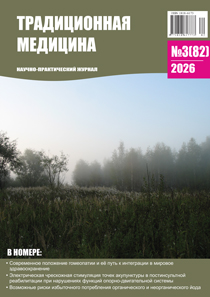
The current situation of understanding the safety of excessive consumption of organic (from traditional sources) and inorganic iodine compounds
Publication 2. Potential risks of excessive consumption of organic and inorganic iodine
DOI:
https://doi.org/10.54296/18186173_2026_3_29Keywords:
iodine, iodine deficiency, excessive iodine intake, iodized salt, algae, seaweed, organic iodine, inorganic iodineAbstract
The purpose of our study is to objectify scientifically based information regarding the potential risks and adverse effects of excessive consumption of organic iodine from traditional natural sources, as well as synthetic iodine salts. In the first publication, we discussed WHO methods for assessing iodine status, the risks of excessive iodine intake (including radioactive), and the iodine status of adults, children, and pregnant women in Europe (according to WHO). We have presented data on the safety of iodine of organic and inorganic origin, confirmed, among other things, by clinical studies. The main concern of experts about the proper and effective use of specialized food products and dietary supplements as sources of organic iodine in the prevention and treatment of diseases and conditions caused by iodine deficiency is related to the insufficient amount of clinical data confirming their effectiveness and safety. Clinical trials are expensive and inaccessible to most manufacturers of domestic specialized food products and dietary supplements. However, the ancient traditional use of algae in food in the coastal regions of the planet, as well as the available results of preclinical and clinical studies of dietary supplements and specialized algae-based foods, allow us to conclude that organic iodine is safe for course use, even in dosages exceeding the upper permissible level of iodine intake.
References
1. Андрюков, Б.Г. Избыток йода в организме – экологический фактор риска развития аутоиммунных заболеваний щитовидной железы? / Б.Г. Андрюков, Т.А. Гвозденко, Н.Б. Демьяненко // Здоровье. Медицинская экология. Наука. – 2015. – Т.60, №2. – С.6–16.
2. Беспалов, В.Г. Лечебно-профилактические препараты из морских водорослей / В.Г. Беспалов. – СПб: Изд-во Политех. ун-та, 2005. – 159 с.
3. Беспалов В.Г. Патогенетическое лечение мастопатии и профилактика рака молочной железы / В.Г. Беспалов // РМЖ. Мать и дитя. – 2018. – Т.1, №2. – С.141–147.
4. Беспалов, В.Г. Современные представления об этиологии и патогенезе мастопатии: возможности патогенетического лечения / В.Г. Беспалов, Е.И. Ковалевская // Гинекология. – 2019; 21 (1): 52–58.
5. Беспалов, В.Г. Йод-Элам – продукт из ламинарии: применение в борьбе с йоддефицитными заболеваниями: пособие для врачей / В.Г. Беспалов, В.Б. Некрасова, А.В. Скальный. – СПб: Нордмедиздат, 2010. – 60 с.
6. Беспалов, В.Г. Йод и женское здоровье / В.Г. Беспалов, И.А. Туманян // Consilium Medicum. – 2019; 21 (6): 13–21.
7. Беспалов, В.Г. Дефицит йода в питании как мультидисциплинарная проблема / В.Г. Беспалов, И.А. Туманян // Лечащий врач. – 2019. – Т.3. – С.8–12.
8. Герасимов, Г.А. Источники и уровни потребления йода в странах Европейского региона Всемирной организации здравоохранения: адаптация к изменениям в питании и образе жизни (сокращенный адаптированный перевод отдельных разделов доклада Европейского регионального бюро ВОЗ) / Г.А. Герасимов // Вопросы питания. – 2025. – Т.94, №4(560). – С.27–38.
9. Герасимов Г.А. Йодный статус населения в странах Европейского региона ВОЗ (сокращенный перевод отдельных разделов доклада Европейского бюро ВОЗ) / Г.А. Герасимов // Проблемы Эндокринологии. – 2025; 71(4): 29-38.
10. Единые санитарно-эпидемиологические и гигиенические требования к продукции (товарам), подлежащей санитарно-эпидемиологическому надзору (контролю) (утв. Решением Комиссии таможенного союза от 28 мая 2010 года N 299, с изменениями на 16 декабря 2025 года). – Раздел 1. Требования безопасности и пищевой ценности пищевых продуктов. Приложение 5.
11. Енина, О.В. Физиологические аспекты антиэкотоксических эффектов препаратов на основе морских водорослей / О.В. Енина, С.Л. Совершаева, С.Ф. Макарова // Экология человека. – 2007. – №10. – С.3–9.
12. Калинченко, С.Ю. Препараты на основе бурых водорослей: биологические свойства, возможности применения в медицине и диетологии / С.Ю. Калинченко, А.С. Смыкалова, Л.О. Ворслов // Вопросы диетологии. – 2019. – Т.9(1). – С.25–32.
13. Карасёва, А.А. Оценка содержания йода в йодированной соли, реализуемой в торговой сети г. Ульяновска / А.А. Карасёва, Л.И. Полотнянко // Научный Лидер. – 2022. – №1(46). – Электронный ресурс. – Доступ: https://scilead.ru/article/1341-otsenka-soderzhaniya-joda-v-jodirovannoj-soli. Дата обращения 19.04.2026.
14. Карзевич, А.Д. Исследование процесса дейодирования йодсодержащей поваренной соли / А.Д. Карзевич // Матер. V Международн. студенч. научн. конф. «Студенческий научный форум», 2013. – Электронный ресурс. – Доступ: https://scienceforum.ru/2013/article/2013003271”>https://scienceforum.ru/2013/article/2013003271. – Дата обращения: 15.04.2026.
15. Киселева, Т.Л. Современные представления о безопасности избыточного потребления соединений органического (из традиционных источников) и неорганического йода: Публикация 1. Индикаторы оценки йодного статуса. Риски избыточного потребления йода / Т.Л. Киселева, М.А. Киселева, С.Н. Стрелецкий // Традиционная медицина. – 2026. – №2(81). – С.13–29.
16. Ламинарии слоевище // Травы, охлаждающие и трансформирующие Флегму-Жар. – Электронный ресурс. – Доступ: https://cinofarm.ru/basestkm/raw_short/286/1896/. – Дата обращения 17.04.2026.
17. Минкоилова, Л.А. Проблема йододефицитных заболеваний и пути ее решения применением напитка с ламинарией / Л.А. Минкоилова, О.Я. Мезенова // Вестник молодежной науки. – 2018. – №2(14). – С.11–13.
18. Петунина, Н.А. Клиническое и эпидемиологическое значение аутоиммунного тиреоидита в структуре тиреоидной патологии йододефицитного региона / Н.А. Петунина // Тиронет. 2002. № 5-6. – Электронный ресурс. – Доступ: http://thyronet.rusmedserv.com/spetsialistam/ zhurnal/archiv/2002g/5. – Дата обращения 15.04.2026.
19. Прилепская, В.Н. Фиброзно-кистозная болезнь молочных желез: возможности негормональной терапии / В.Н. Прилепская, Т.Т. Тагиева // Практическая медицина 04 (09) Онкология. – 2009, 1 июня. – Электронный ресурс. – Доступ: https://pmarchive.ru/fibrozno-kistoznaya-bolezn-molochnyx-zhelez-vozmozhnosti-negormonalnoj-terapii/. – Дата обращения 18.04.2026.
20. Применение йодказеина для предупреждения йоддефицитных заболеваний в качестве средства популяционной, групповой и индивидуальной профилактики йодной недостаточности // Методические рекомендации МР 2.3.7.1916—04. – М.: Федеральный центр госсанэпиднадзора Минздрава России, 2004. – 15 с.
21. Профилактика и борьба с дефицитом йода в Европейском регионе: адаптация к изменениям в рационе питания и образе жизни // ВОЗ: Европейское региональное бюро. – 2024. – 122 с. – Электронный ресурс. – ISBN: 9789289061193. – Доступ: https://www.who.int/europe/publications/i/item/9789289061193. – Дата обращения 11.02.2026. – 128 с.
22. Состояния, вызванные приемом амиодарона, в практике кардиолога и эндокринолога / Н.Ю. Свириденко, Н.М. Платонова, Н.В. Молашенко [и др.] // Лечащий врач. – 2004. – №2. – Электронный ресурс. Доступ: https://www.lvrach.ru/2004/02/4531025. – Дата обращения 15.04.2026.
23. Сова, В.В. Способ получения лечебно-профилактической добавки / В.В. Сова // Патент RU 2384342, 2010.
24. Сова, В.В. Способ извлечения водорастворимых компонентов растений / В.В. Сова // Патент RU2569728, 2015.
25. Соловьев, В.Б. Йоддефицит и его профилактика: современное состояние проблемы / В.Б. Соловьев, М.В. Кальянов // Современные проблемы науки и образования. – 2025. – №3. – Электронный ресурс. – Доступ: https://science-education.ru/ru/article/view?id=34051. – Дата обращения: 25.02.2026.
26. Трошина, Е.А. К вопросу о недостатке и избытке йода в организме человека / Е.А. Трошина // Клиническая и экспериментальная тиреоидология. – 2010. – Т.6, №4. – С.9–16.
27. Трошина, Е.А. Устранение дефицита йода – забота о здоровье нации. Экскурс в историю, научные аспекты и современное состояние правового регулирования проблемы в России / Е.А. Трошина // Проблемы эндокринологии. – 2022. – №68(4). – С.4–12.
28. Трошина, Е.А. Метаболизм йода и профилактика йододефицитных заболеваний у детей и подростков / Е.А. Трошина, Н.М. Платонова // Вопросы современной педиатрии. – 2008. – Т.7, №3. – С.66–75.
29. Фоменко, С.Е. Использование экстракта из морской бурой водоросли Sargassum pallidum для восстановления показателей антиоксидантной системы на модели стресс-воздействия / С.Е. Фоменко // Здоровье. Медицинская экология. Наука. – 2018; 3(75): 59–65.
30. Прогресс в профилактике и устранении йододефицитных заболеваний (ЙДЗ) в регионе Европы и Центральной Азии (ЕЦАР) в 2010–2020 годах / Л. Цуркан, Г. Герасимов, И. Парванта, А. Тиммер // Клиническая и экспериментальная тиреодология. – 2021. – Т.17, №4. – С.4–16.
31. Цыб, А.Ф. «Йодказеин» как средство для профилактики йодной недостаточности / А.Ф. Цыб, Р.А. Розиев // Здоровье населения и среда обитания. Информ. бюлл ФЦ ГСЭН М3 РФ. – 2001. – №2(95). – С.18–22.
32. Функциональная пригодность йодказеина для профилактики йодной недостаточности / А.Ф. Цыб, Р.А. Розиев, А.Я. Гончарова [и др.] // Вестник Российской Академии медицинских наук. – 2001. – №6. – С. 17–21.
33. Функциональная пригодность «Йодказеина» для профилактики йодной недостаточности / А.Ф. Цыб, Р.А. Розиев, А.Я. Гончарова [и др.] // Вестник РАМН. – 2001. – №6. – С.17–21.
34. Средство для регулирования йодного обмена или профилактики йоддефицитных состояний / А.Ф. Цыб, Р.А. Розиев, В.Г. Скворцов. Патент РФ № 2151611, 2000.
35. «Йодказеин» ликвидирует йодную недостаточность / А.Ф. Цыб, В.В. Шахтарин, Р.А. Розиев [и др.] // Молочная промышленность. – 2000. – №6. – С.45–48.
36. Bioavailability of iodine from a meal consisting of sushi and a wakame seaweed salad - a randomized crossover trial / I. Aakre, I.B. Tveit, L.S. Myrmel [et al.] // Food Sci Nutr. – 2023; 11(12): 7707–7717.
37. Alkhuja, S. In the eye of the storm: Iodinated contrast medium induced thyroid storm presenting as cardiopulmonary arrest / S. Alkhuja, R. Pyram, O. Odeyemi // Heart Lung. – 2013; 42: 267–269.
38. Effects of combined iodine and selenium deficiency on thyroid metabolism in rats / G.J. Beckett, F. Nicol, P.W.H. Rae [et al.] // Am J Clin Nutr. – 1993. – 57 (suppl.): 240–243.
39. Nutraceutical Supplements in the Thyroid Setting: Health Benefits beyond Basic Nutrition / S. Benvenga, U. Feldt-Rasmussen, D. Bonofiglio, E. Asamoah // Nutrients. – 2019. – Vol. 11, Is. 9. – Р. 2214.
40. Iodination of docosahexaenoic acid by lactoperoxidase and thyroid gland in vitro: formation of an iodolactone / J.M. Boeynaems, J.T. Watson, J.A. Oates, W.C. Hubbard // Lipids. – 1981. – 16: 323–327.
41. Brown-Grant, K. Extrathyroidal iodide concentrating mechanisms / K. Brown-Grant // Physiol Rev. – 1961. – 41: 189–213.
42. The Iodine Rush: Over- or Under-Iodination Risk in the Prophylactic Use of Iodine for Thyroid Blocking in the Event of a Nuclear Disaster / V. Calcaterra, C. Mameli, V. Rossi, G. Massini [et al.] // Front. Endocrinol. – 2022. – 13: 901620.
43. Cann, S.A. Hypothesis: Iodine, selenium and the development of breast cancer / S.A. Cann, J.P. van Netten, Ch. van Netten // Cancer Causes and Control. Kluwer Academic Publishers. Printed in the Netherlands. – 2000. – 11: 121–127.
44. Decreased incidence of prostate cancer with selenium supplementation: results of a double-blind cancer prevention trial / L.C. Clark, B. Dalkin, A. Krongrad [et al.] // Br J Urol. – 1998. – 81: 730–734.
45. Low-level seaweed supplementation improves iodine status in iodine-insufficient women / E. Combet, Z.F. Ma, F. Cousins [et al.] // Br J Nutr. – 2014; 112(5): 753–761.
46. Contreras-Jurado, S.C. Thyroid Hormones and Co-workers: An Overview / S.C. Contreras-Jurado // Methods Mol Biol. – 2025. – Vol.2876. – Р.3–16.
47. Dugrillon A. Iodolactones and iodoaldehydes - mediators of iodine in thyroid autoregulation // Exp Clin Endocrinol Diabetes. – 1996, 104 (suppl.): 41–45.
48. Identification of delta-iodolactone in iodide treated human goiter and its inhibitory effect on proliferation of human thyroid follicles / A. Dugrillon, W.M. Uedelhoven, M.A. Pisarev [et al.] // Horm Metab Res. – 1994. – 26: 465–469.
49. Duntas, L.H. Environmental factors and autoimmune thyroiditis / L.H. Duntas // Nat. Clin. Pract. Endocrinol. Metab. – 2008; 4: 454–60.
50. Development of Databases on Iodine in Foods and Dietary Supplements / A.G. Ershow, S.A. Skeaff, J.M. Merkel, P.R. Pehrsson // Nutrients. – 2018. – Т. 10. – №. 1. – С. 100.
51. Different tissue responses for iodine and iodide in rat thyroid and mammary glands / B.A. Eskin, C.E. Grotkowski, C.P. Connolly, W.R. Ghent // Biol Trace Elem Res. – 1995. – 49: 9–19.
52. Human breast uptake of radioactive iodine / B.A. Eskin, J.A. Parker, J.G. Bassett, D.L. George // Obstet Gynecol. – 1974. – 44: 398–402.
53. Farebrother, J. Excess iodine intake: sources, assessment, and effects on thyroid function / J. Farebrother, M.B. Zimmermann, M. Andersson // Ann N Y Acad Sci. – 2019; 1446(1): 44–65.
54. Gartner, W. Do iodine-containing contrast media induce clinically relevant changes in thyroid function parameters of euthyroid patients within the first week? / W. Gartner, M. Weissel // Thyroid. – 2004; 14: 521–524.
55. Iodine replacement in fibrocystic disease of the breast / W.R. Ghent, B.A. Eskin, D.A. Low, L.P. Hill // Can J Surg. – 1993; 36 (5): 453–460.
56. Giani, C. Relationship between breast cancer and thyroid disease: relevance of autoimmune thyroid disorders in breast malignancy / C. Giani, P. Fierabracci, R. Bonacci // J Clin Endocrinol Metab. – 1996. – 81: 990–994.
57. Association of soy and fiber consumption with the rise of endometrial cancer / M.T. Goodman, L.R. Wilkens, J.H. Hankin [et al.] // Am J Epidemiol. – 1997. – 146: 294–306.
58. Haagensen, C.D. Diseases of the Breast / C.D. Haagensen. – Philadelphia, PA: WBSaunders, 1971. – 62 p.
59. Harrison, M. Edible Seaweeds around the British Isles / M. Harrison // Wild Food School. – 2008. – Электронный ресурс. – Доступ: https://web.archive.org/web/20150721104212/http://www.countrylovers.co.uk/wfs/wfsseaweed.htm. – Дата обращения 20.02.2026.
60. Transfer of carbohydrate-active enzymes from marine bacteria to Japanese gut microbiota / J.-H. Hehemann, G. Correc, T. Barbeyron [et al.] // Nature. – 2010. – Vol.464. – Р.908–912.
61. Hintze, G. Treatment of iodine deficient goiter with iodine, levothyroxine or a combination of both / G. Hintze, J. Kobberling // Thyroidology. – 1992. – 4: 37–40.
62. Institute of Medicine (U.S.), Academy of Sciences, USA. DRI: Dietary Reference Intakes for Vitamin A, Vitamin K, Arsenic, Boron, Chromium, Copper, Iodine, Iron, Manganese, Molybdenum, Nickel, Silicon, Vanadium, and Zinc: A Report of the Panel on Micronutrients … And the Standing Committee on the Scientific Evaluation of Dietary Reference Intakes, Food and Nutrition Board, Institute of Medicine. – Washington, D.C: National Academy Press, 2001. – 773 p.
63. Iodine. Monograph. // Altern Med Rev. – 2010. – 15 (3): 273–278.
64. Kai Recipe’s used by Kawhia Maori & Early Pioneers // Kawhia.maori.nz. – Архивная копия: 2020. – Электронный ресурс. – Доступ: https://web.archive.org/web/20200118192629/http://www.kawhia.maori.nz/kai-recipes.html. – Дата обращения 20.02.2026
65. Suppressive effect of iodine preparations on proliferation of DMBA-induced breast cancer in rat / N. Kato, H. Funahashi, K. Ando, H. Takagi // J Jpn Soc Cancer Ther. – 1994. – 29: 582–588.
66. A case-control study of lactation and cancer of the breast / K. Katsouyanni, L. Lipworth, A. Trichopoulou [et al.] // Br J Cancer. – 1996. – 73: 814–818.
67. Kelsey, J.L. Reproductive factors and breast cancer / J.L. Kelsey, M.D. Gammon, E.M. John // Epidemiol Rev. – 1993. – 15: 36–47.
68. Kessler, J.H. The effect of supraphysiologic levels of iodine on patients with cyclic mastalgia / J.H. Kessler // Breast J. – 2004. – 10 (4): 328–36.
69. A case-control study of diet and prostate cancer / T.J.A. Key, P.B. Silcocks, G.K. Davey [et al.] // Br J Cancer. – 1997. – 76: 678–687.
70. Clinical evaluation of the iodide/creatinine ratio of casual urine samples as an index of daily iodide excretion in a population study / N. Konno, K. Yuri, K. Miura [et al.] // Endocr J. – 1993. – 40: 163–169.
71. Kun, J. Prevention and Treatment of Cancer in Traditional Chinese Medicine / J. Kun. – Quarry Bay, Hong Kong: Commercial Press, 1989. – Р. 211–212.
72. Environmental iodine intake affects the type of nonmalignant thyroid disease / P. Laurberg, I. Bulow Pedersen, N. Knudsen [et al.] // Thyroid. – 2001. – 11(5): 457–469.
73. Leung, A.M. Consequences of excess iodine / A.M. Leung, L.E. Braverman // Nat Rev Endocrinol. – 2014. – 10(3): 136–142.
74. Leung, A.M. History of U.S. iodine fortification and supplementation / A.M. Leung, L.E. Braverman, E.N. Pearce // Nutrients. – 2012. – Vol. 4. – Р.1740–1746.
75. Leung, A.M. Iodine content of prenatal multivitamins in the United States / A.M. Leung, E.N. Pearce, L.E. Braverman // N. Engl. J. Med. – 2009. – 360: 939–940.
76. London, S.J. Breast-feeding and breast cancer / S.J. London // N Engl J Med. – 1994. – 330: 1682.
77. Manjer, J. Serum Iodine and Breast Cancer Risk: A Prospective Nested Case-Control Study Stratified for Selenium Levels / J. Manjer, M. Sandsveden, S. Borgquist // Cancer Epidemiol Biomarkers Prev. – 2020 Jul. – 29(7):1335–1340.
78. Prospective assessment of breastfeeding and breast cancer incidence among 89 887 women / K.B. Michels, W.C. Willett, B.A. Rosner [et al.] // Lancet. – 1996. – 347: 431–436.
79. Lactation and a reduced risk of premenopausal breast cancer / P.A. Newcomb, B.E. Storer, M.P. Longnecker [et al.] // N Engl J Med. – 1994. – 330: 81–87.
80. Oger, C. Lato, the strange sea salad / C. Oger // Le manger. – Архивная копия от 5 марта 2016. – Электронный ресурс. – Доступ: https://web.archive.org/web/20160305083442/http://www.lemanger.fr/en/index.php/lato-the-strange-sea-salad/?lang=en. – Дата обращения 20.02.2026.
81. Thyroid functions after contrast agent administration for coronary angiography: A prospective observational study in euthyroid patients / S. Ozkan, A.S. Oysu, K. Kayatas [et al.] // Anadolu Kardiol. Derg. – 2013. – 13: 363–369.
82. One month is sufficient for urinary iodine to return to its baseline value after the use of water-soluble iodinated contrast agents in post-thyroidectomy patients requiring radioiodine therapy / R.P. Padovani, T.S. Kasamatsu, C.C. Nakabashi [et al.] // Thyroid. – 2012. – 22: 926–30.
83. Pearce, E.N. Global iodine nutrition: Where do we stand in 2013? / E.N. Pearce, M. Andersson, M.B. Zimmermann // Thyroid. 2013 May. – 23(5): 523–528.
84. Iodine in Foods and Dietary Supplements: A Collaborative Database Developed by NIH, FDA and USDA / P.R. Pehrsson, J.M. Roseland, K.Y. Patterson [et al.] // J Food Compost Anal. – 2022 Jun. – 109: 104369.
85. Studies on the goiter inhibiting action of iodolactones / M.A. Pisarev, L. Krawiec, G.J. Juvenal [et al.] // Eur J Pharmacol. – 1994. – 258: 33–37.
86. Pollard, K.M. Toxicology of Autoimmune Diseases / K.M. Pollard, P. Hultman, D.H. Kono // Chem Res Toxicol. Chem Res Toxicol. – 2010. – 23(3): 455–466.
87. Prevention and Control of Iodine Deficiency in the WHO European Region: Adapting to Changes in Diet and Lifestyle. – Copenhagen: WHO Regional Office for Europe, 2024. – 128 с.
88. Ravera S., Reyna-Neyra A., Ferrandino G., Amzel L.M., Carrasco N. The Sodium/Iodide Symporter (NIS): Molecular Physiology and Preclinical and Clinical Applications // Annu Rev Physiol. – 2017. – Vol.79. – Р.261–289.
89. Association between iodinated contrast media exposure and incident hyperthyroidism and hypothyroidism / C.M. Rhee, I. Bhan, E.K. Alexander, S.M. Brunelli // Arch. Intern. Med. – 2012. – 172: 153–159.
90. Rosenfeld, L. Discovery and early uses of iodine / L. Rosenfeld // J. Chem. Educ. – 2000. – Vol.77. – Р. 984–987.
91. Russo, J. Role of diferentiation in the pathogenesis and prevention of breast cancer / J. Russo, I.H. Russo // Endo-Rel Cancer. – 1997. – 4: 7–21.
92. Ross, R.K. Breast-feeding and breast cancer / R.K. Ross, M.C. Yu // N Engl J Med. – 1994. – 330: 1683.
93. Seaweed uses and utilization // The Seaweed Site: information on marine algae. – Архивная копия от 07.03.2016. – Электронный ресурс. – Доступ: https://web.archive.org/web/20160307035413/http://www.seaweed.ie/uses_general/index.php. – Дата обращения 19.04.2026.
94. Iodoprotein formation by rat mammary glands during pregnancy and early postpartum period / N.M. Shah, B.A. Eskin, T.B. Krouse, C.E. Sparks // Proc Soc Exp Biol Med. – 1986. – 181: 443-449.
95. Smyth, P.P.A. Thyroid disease and breast cancer / P.P.A. Smyth // J Endocrinol Invest. – 1993. – 16: 396-401.
96. Smyth, P.P. The thyroid and breast cancer / P.P. Smyth // Curr Opin Endocrinol Diabetes Obes. – 2016. – 23 (5): 389–393.
97. Smyth, P.P.A. Iodine, seaweed, and the thyroid / P.P.A. Smyth // Eur. Thyroid J. – 2021. – Vol.10, №2. – P.101–108.
98. Iodine intake in Ireland – an update / P.P.A. Smyth, A.M. Hertherton, D. O›Carroll [et al.] // Ir J Med Sci. – 1988. – 157: 377–379.
99. Southern, A.P. Iodine Toxicity. [Updated 2024 May 2] / A.P. Southern, C. Anastasopoulou, S. Jwayyed // In: StatPearls [Internet]. Treasure Island (FL): StatPearls Publishing; 2026 Jan. – Электронный ресурс. – Доступ: https://www.ncbi.nlm.nih.gov/books/NBK560770/. – Дата обращения 14.04.2026.
100. Stadel, B.V. Dietary iodine and risk of breast, endometrial, and ovarian cancer / B.V. Stadel // Lancet. – 1976. – 1: 890-891.
101. Thyroid hormones and selenium status in breast cancer / J.J. Strain, E. Bokje, P. van’t Veer [et al.] // Nutr Cancer. – 1997. – 27: 48–52.
102. Strum, J.M. Effect of iodide-deficiency on rat mammary gland / J.M. Strum // Virchows Arch [B]. – 1979. – 30: 209–220.
103. Strum, J.M. Resting human female breast tissue produces iodinated proteins / J.M. Strum, P.C. Phelps, M.M. McAtee // J Ultrastruct Res. – 1983. – 84: 130–139.
104. Sundstrom, H. Serum selenium and thromboxane in patients with gynaecological cancer / H. Sundstrom, O. Ylikorkala, A. Kappila // Carcinogenesis. – 1986. – 7: 1051–1052.
105. Relationship between the levels of serum thyroid hormones or estrogen status and the risk of breast cancer genesis in Japanese women / O. Takatani, T. Okumoto, H. Kosano [et al.] // Cancer Res. – 1989. – 49: 3109–3112.
106. Targovnik H.M., Citterio C.E., Rivolta C.M. Iodide handling disorders (NIS, TPO, TG, IYD) // Best Pract Res Clin Endocrinol Metab. – 2017. – Vol.31, Is.2. – P. 195–212.
107. Taurog A. Hormone synthesis: thyroid iodine metabolism // In: Braverman LE, Utiger RD; eds. The Thyroid: A Fundamental and Clinical Text; 7th edn. Philadelphia, PA: Lippincott-Raven, 1996. – Р.47–81.
108. Variability of iodine content in common commercially available edible seaweeds / J. Teas, S. Pino, A. Critchley, L.E. Braverman // Thyroid. – 2004. – 14: 836–841.
109. Thomas, D.B. Breast cancer and prolonged lactation. The WHO Collaborative Study of Neoplasia and Steroid Contraceptives / D.B. Thomas, E.A. Noonan // Int J Epidemiol. – 1993. – 22: 619–626.
110. Nomogram Model Based on Iodine Nutrition and Clinical Characteristics of Papillary Thyroid Carcinoma to Predict Lateral Lymph Node Metastasis / J. Wang, Y. Gao, Y. Zong [et al.] // Cancer Control. – 2023. – 10732748231193248.
111. WHO/UNICEF/ICCIDD (World Health Organization, United Nations Children Fund, International Council for the Control of the Iodine Deficiency Disorders): Assessment of the iodine deficiency disorders and monitoring their elimination. A guide for programme managers, 3rd ed. Geneva: World Health Organization; 2007. – [Электронный ресурс]. – Доступ: https://iris.who.int/handle/10665/43781. – Дата обращения: 26.02.2026.
112. WHO/UNICEF/ICCIDD (World Health Organization, International Council for Control of Iodine Deficiency Disorders & United Nations Children’s Fund). Indicators for Assessing Iodine Deficiency Disorders and Their Control through Salt Iodization. World Health Organization; Geneva, Switzerland. – 2024. [Электронный ресурс]. – Доступ: https://apps.who.int/iris/handle/10665/70715. – Дата обращения 26.02.2026.
113. WHO Secretariat on behalf of the participants to the consultation; Andersson M., de Benoist B., Delange F., Zupan J. Prevention and control of iodine deficiency in pregnant and lactating women and in children less than 2-years-old: conclusions and recommendations of the Technical Consultation // Public Health Nutr. – 2007. – Vol. 10. – № 12A. – P. 1606–1611.
114. Wolff, J. Plasma inorganic iodide, a chemical regulator of normal thyroid function / J. Wolff, I.L. Chaikoff // Endocrinology. – 1948. – Vol. 42. – P.468–471.
115. A case-control study of breast cancer in Taiwan – a low-incidence area / P.-S. Yang, T.-L. Yang, C.-L. Liu [et al.] // Br J Cancer. – 1997. – 75: 752–756.
116. Relationship between thyroid-pituitary function and response to therapy in patients with recurrent breast cancer / T. Yokoe, Y. Iino, H. Takei [et al.] // Anticancer Res. – 1996. – 16: 2069–2072.
117. Independent protective efect of lactation against breast cancer: a case-control study / K.Y. Yoo, K. Tajima, T. Kuroishi [et al.] // Am J Epidemiol. – 1992. – 135: 726–733.
118. Pendrin is a novel autoantigen recognized by patients with autoimmune thyroid diseases / A. Yoshida, I. Hisatome, S. Taniguchi [et al.] // J Clin Endocrinol Metab. – 2009 Feb. – 94(2): 442–448.
119. Trail and DR5 promote thyroid follicular cell apoptosis in iodine excess-induced experimental autoimmune thyroiditis in NOD mice / X. Yu, L. Li, Q. Li [et al.] // Biol. Trace Elem. Res. – 2011. – 143: 1064–1076.
120. Zhang, D.-Z. TheTreatment of Cancer by Integrated Chinese-Western Medicine / D.-Z. Zhang. – Boulder, CO: Blue Poppy Press, 1989. – Р.21–43.
121. Zimmermann M.B., Andersson M. Update on iodine status worldwide / Zimmermann M.B., Andersson M. // Curr. Opin. Endocrinol. Diabetes Obes. – 2012. – 19: 382–387.
122. Zimmermann, M.B. Iodine deficiency and thyroid disorders / M.B. Zimmermann, K. Boelaert // Lancet Diabetes Endocrinol. – 2015. – 3(4): 286–295.
123. Zimmermann, M.B. Iodine Intake as a Risk Factor for Thyroid Cancer: A Comprehensive Review of Animal and Human Studies / M.B. Zimmermann, V. Galetti // Thyroid Res. – 2015. – 8: 8.
Downloads
Published
Issue
Section
License
Reproduction of any materials without the written permission of the publisher is prohibited.
The responsibility for the accuracy of the information contained in articles and advertisements are the authors and advertisers.